Direct Booking means a guest completes a reservation directly on the property’s official website instead of going through an OTA (online travel agency). Because direct bookings require no OTA commission (typically 15–18% of the room rate), and because they let you capture guest information, cultivate repeat guests and build a membership program, increasing the share of direct website bookings has become a key way for accommodation operators to lower costs and lift long-term revenue. This article explains the true cost of OTA commissions, the value of direct booking, and how to build a membership program.
\n\n
1. OTA Commissions: How Much Revenue Do They Really Eat Up?
\n\n
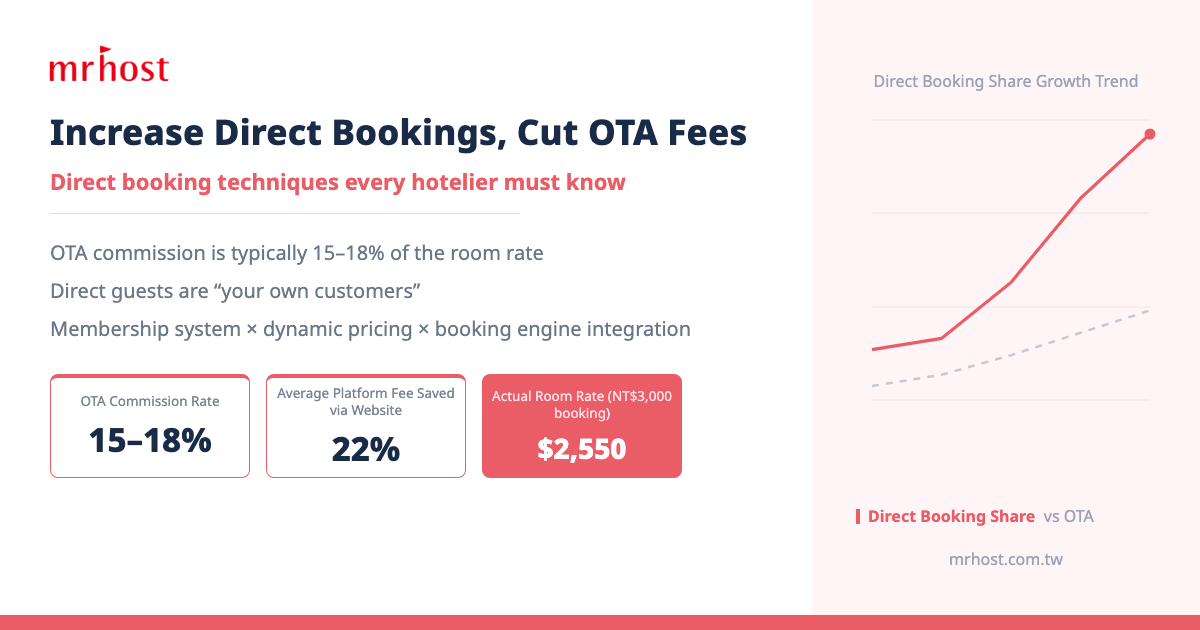
For most accommodation operators, OTAs (such as Booking.com, Agoda, Ctrip and Airbnb) are the most convenient channel for reaching guests, delivering large amounts of exposure and bookings. But that exposure comes at a price——OTAs take a commission on every booking, usually falling between 15–18% of the room rate.
\nLook at that number from another angle: on an NT$3,000 booking, a 15% OTA commission is NT$450, leaving the property with an actual room rate of just NT$2,550. If nearly all of a property’s bookings for the year come from OTAs, it is effectively handing close to one-fifth of its revenue to the platform on an ongoing basis.
\nOTAs deliver outstanding marketing results and are hard to replace entirely in the short term. But if a property can shift a portion of its bookings from OTAs to its own website, the saved commission converts directly into revenue. That is why “increasing direct website bookings” is a long-term and important part of revenue management work.
\n\n
2. The Value of Direct Bookings Is More Than Just Saving Commission
\n\n
The benefit of direct bookings is often reduced to “saving commission.” Saving commission is indeed the most immediate benefit, but the real long-term value lies in “ownership” of the guest.
\nA guest who comes through an OTA is essentially “the platform’s customer”——the membership tier and points they accumulate belong to the platform, and their contact details and booking preferences are held by the platform. The next time the guest wants to book a room, they will use the platform again because it offers member benefits, cutting off the property’s opportunity to cultivate its own repeat guests.
\nA guest who books directly on your website, however, is “your own customer.” You can obtain their contact details, understand their preferences, and then cultivate repeat guests through a membership system, messaging apps, member benefits and more. For a property, every percentage point increase in the share of direct bookings adds a considerable amount of revenue each year.
\nPut simply, OTAs are best used to “acquire new guests,” while direct bookings are best used to “cultivate loyal guests.” The two are not mutually exclusive but complementary.
\n\n
3. How to Actually Increase the Share of Direct Bookings?
\n\n
1. Give Guests a Reason to “Book Direct”
\nWhy would a guest abandon a familiar OTA and book on your website instead? There has to be an incentive. Common approaches include website-exclusive rates, member-only packages, or added-value services (free upgrades, late checkout, etc.).
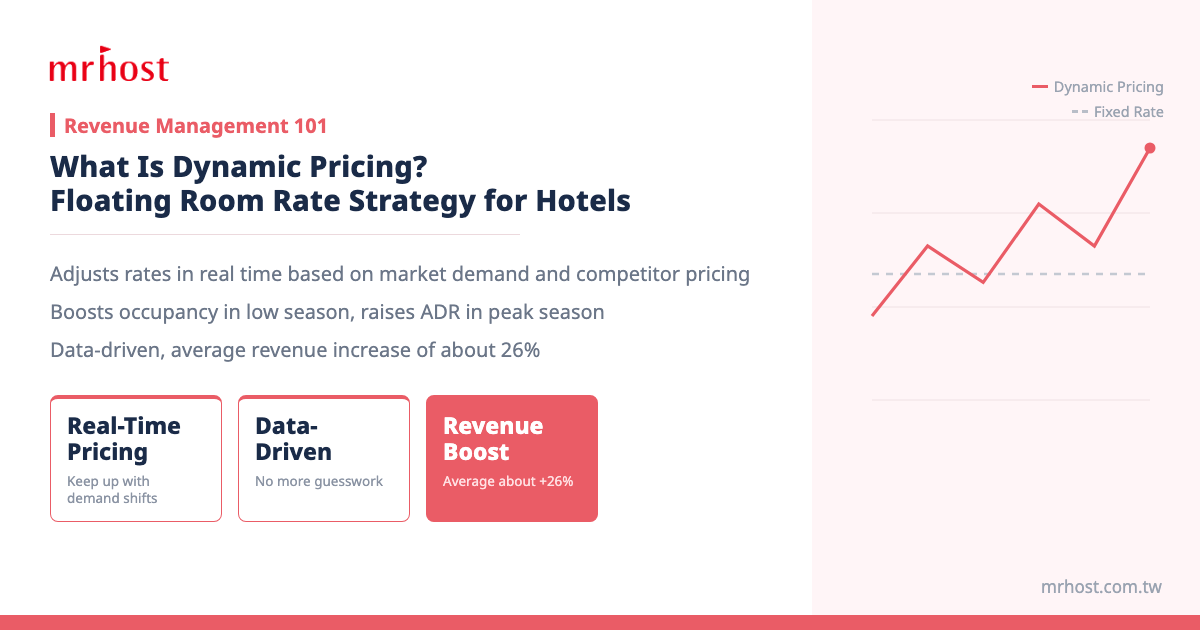
\nHere you need to mind “rate parity”——your actual room rate across the various OTA platforms should stay consistent, but because your website carries no commission cost it inherently has room to give back, so you can offer better terms on the website than on OTAs, and use a real-time dynamic pricing system so that website and OTA rates adjust together according to low and peak seasons.
\n\n
2. Make the Website Booking Process Smooth
\nMany properties offer a website booking experience that is less smooth than an OTA——too many steps, a hard-to-use mobile version, limited payment methods—and guests give up halfway through booking. The official website should avoid using a one-page website and instead use a Booking Engine to achieve mobile-friendliness, streamlined steps and diverse payment methods, so that guests can complete every booking operation directly on the official website, raising their willingness to book through the website.
\n\n
3. Use Content and SEO to Drive Traffic to the Website
\nBefore deciding where to stay, guests often search for information on destinations, attractions, accommodation comparisons and the like. Through content such as marketing ads or video introductions (local tours, neighborhood guides, accommodation features), make the property visible and redirect traffic that would have flowed to OTAs or blogs back to your own website.
\n\n
4. Build a Membership System and Remarketing Mechanism
\nBring guests who come from OTAs into the property’s own membership system and record their basic information. Afterward, proactively notify guests through messaging apps, member benefits, special events and other means so that next time they return directly to the website to book, without going through an OTA again. Building a membership system and increasing the share of direct bookings is, in the long run, one of the most important tasks for a property.
\n\n
4. Direct Bookings vs. OTAs: How Should You Allocate Them?
\n\n
The goal is not to cut OTAs out. For most properties, the exposure and source of new guests that OTAs provide are indispensable, especially while brand awareness is still building.
\nA more pragmatic goal is to gradually raise the share of direct bookings to a healthy level so that the property does not over-rely on a single booking channel. As the share of direct bookings rises, the property not only saves commission but also gains greater control over its own guest base and pricing, and becomes more resilient when facing changes in OTA policies.
\nAs for what a “healthy ratio” is, it varies with the property’s location, guest base and brand awareness; there is no one-size-fits-all standard. This is exactly where revenue management services can help——by analyzing the guest profiles and cost structures of various booking sources to identify the most suitable mix of platform and direct bookings for that property.
\n\n
5. Managing Direct Bookings: Do It Yourself or Outsource?
\n\n
Managing direct bookings involves several components such as website packages, dynamic pricing and a membership system. For properties with limited manpower, effectively running a good website is not easy.
\nManaging it in-house suits properties that have a suitable manager and a certain level of expertise; if you lack dedicated staff, or want to see results faster, you can consider engaging a revenue management consultancy, where professional consultants pair AI tools with everything from early-stage website setup to package planning and subsequent dynamic pricing operations. mrhost Revenue Management Consultancy’s “direct booking growth” service covers exactly this area, helping properties gradually build up their own membership program while maintaining OTA exposure.
\n\n
FAQ
\n\n
Q: To increase direct bookings, should I just pull out of OTAs?
A: Not recommended. The exposure and new-guest source from OTAs are hard to replace, especially for properties still building brand awareness. The better approach is to keep acquiring guests via OTAs while gradually raising the share of direct bookings, reducing reliance on a single channel rather than choosing one over the other.
Q: Can the website price be set lower than the OTA? Will that affect rate parity?
A: Yes. The goal of “rate parity” is for the actual room rate to be consistent across the various OTA platforms, while letting the website be slightly cheaper or offer different accommodation packages. Because the website carries no commission cost, it inherently has room to give back, and offering better terms than OTAs (special rates or added-value services) is the only way to attract repeat guests to book on the website.
Q: Can a small property with no marketing staff still manage direct bookings?
A: Yes. Managing direct bookings can start from the most basic website packages and membership system setup; you do not have to do everything at once. Properties with limited manpower can also engage a revenue management consultancy to help operate it, spending resources where they matter most.
Q: Once I start building a website, how soon will commission costs drop?
A: That depends on the property’s original share of direct bookings and the resources invested in building the website. Generally, once the website booking experience and promotional packages are set up, the share of direct bookings has a chance to gradually rise, and platform commission costs will fall accordingly. The key is to treat it as long-term management rather than a short-term campaign.
Q: How are guests who book directly different from guests who come from OTAs?
A: The biggest difference is “ownership.” For website guests, you can hold their contact details and preferences and directly cultivate repeat guests afterward; the data of guests who come from OTAs is mostly held by the platform, and reaching them again requires going through the platform each time. This is also the long-term value of building a website.
*This testimonial and data are provided by an individual client and reflect that person’s individual views and experience. This testimonial and data do not represent the experience of all users, nor do they constitute any guarantee of similar results.\n
This article was written by the mrhost Revenue Management team. mrhost provides accommodation revenue management consulting services, helping hotels and B&B operators in Taiwan and the Asia-Pacific region increase revenue and competitiveness.