Major international events (international sporting events, large conferences, world-class expos) and policy shifts (visa waivers, new air routes, a new airport terminal or convention center) affect hotels differently from an ordinary concert or holiday: they are city-wide, cross-border, long-horizon changes in demand — worth far more than a few peak-rate nights. They are an opportunity to build international demand and reshape your guest mix and distribution over the medium to long term. Faced with this kind of opportunity, a hotel’s job is not only to price the event nights well, but to plan ahead — strengthening the website’s ability to take international bookings, cultivating cross-border demand, and turning a short burst of exposure into long-term revenue. This guide explains how international events and policy shifts differ from ordinary big events, the revenue opportunity in each, and the medium-to-long-term roadmap.
Key Takeaways
- International events and policy shifts are city-wide, cross-border, long-horizon shifts in demand — affecting the whole city, not just the area around one venue.
- The value of a major international event isn’t only the event-night rate, but the chance to build international demand — turning one burst of exposure into long-term inbound bookings.
- A policy shift (visa waiver, new route, new infrastructure) brings a structural shift in demand; the response is to adjust your guest mix and distribution, not short-term repricing.
- These opportunities are mostly announced in advance and predictable, but the lead time to prepare is longer than a holiday — think in quarters or even years.
- Leave event-night day-by-day rates to a dynamic pricing system, and the medium-to-long-term guest-mix and distribution shift to a revenue management consultant.
1. How do international events and policy shifts differ from an ordinary big event?
In “A big event is coming — how should hotels price?” we looked at the short-term inventory adjustment for concerts and sporting events — demand concentrated around the venue and the days around the event, with the focus on getting the size of a price increase right. International events and policy shifts are similar in nature, but on a completely different scale and timescale, in three ways:
The scope is city-wide, not just around the venue. An international sporting event or a large international conference mobilizes a whole city’s accommodation capacity. Athletes’ teams, traveling media, sponsors, staff, and international spectators are spread across every district, so demand isn’t only around the main venue — even hotels within commuting distance can benefit.
The guest base is cross-border, not mainly local. Concerts and holidays draw mostly domestic guests; international events and policy tailwinds bring inbound demand from abroad. These travelers differ from domestic guests in booking channel, language, payment method, and length of stay — a guest base you rarely get to reach in volume all at once.
The timeframe is a long horizon, not a few days. An ordinary big event affects a few days; the build-up to an international event and the impact of a policy shift run in quarters, even years. Host cities often start preparing years in advance, and the impact carries on well after the event.
These three differences mean a hotel should approach them with a different mindset: not just the tactical question of “how to price the event nights,” but the strategic question of “how to reshape my guest mix and distribution while the opportunity is here.”
2. Major international events: not just event-night rates, but a chance to build international demand
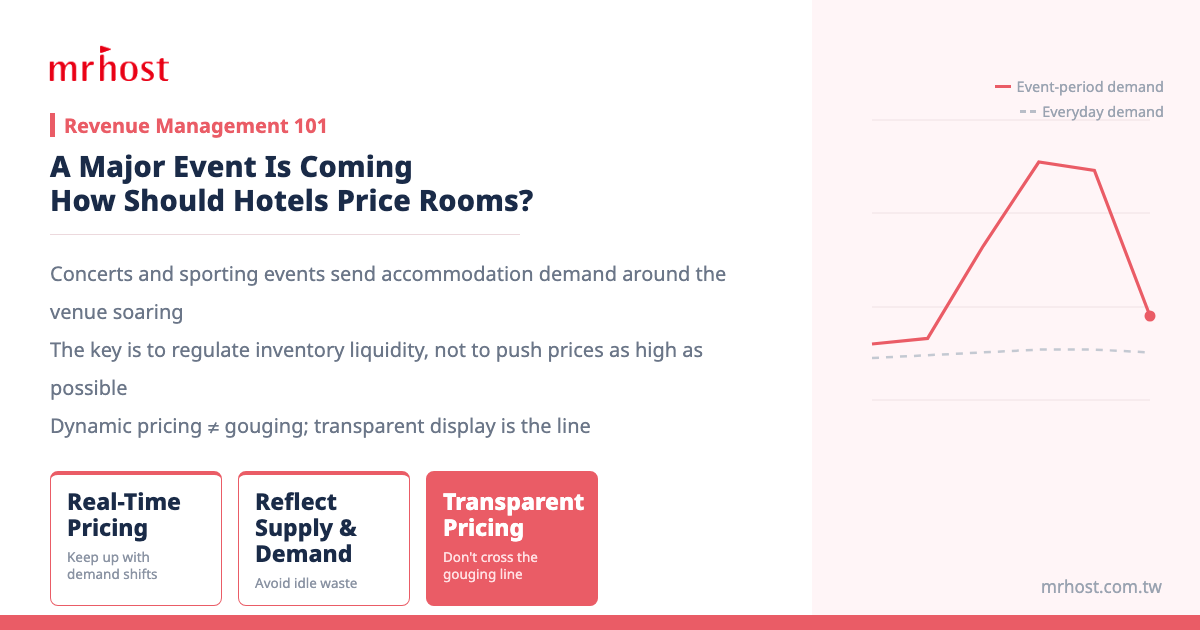
The first thing that comes to mind with a major international event is the rate opportunity during the event. Here the principle is the same as for any big event — let rates reflect real supply and demand based on your own demand strength and the competitive set’s live rates, adjusting day by day across a multi-day program rather than putting one rate across the whole event. Demand usually starts rising the moment the event and its schedule are announced, so the earlier you watch it the better, and it shifts as ticket and flight sales progress.
But what really sets an international event apart from an ordinary one is its value in building international demand. A major event brings a large number of overseas travelers into the city — an opportunity you rarely get. Whether you can capture this group, and even turn them into future repeat guests and a source of word of mouth, affects revenue for several seasons after the event. To capture this international demand, a hotel can work on a few fronts:
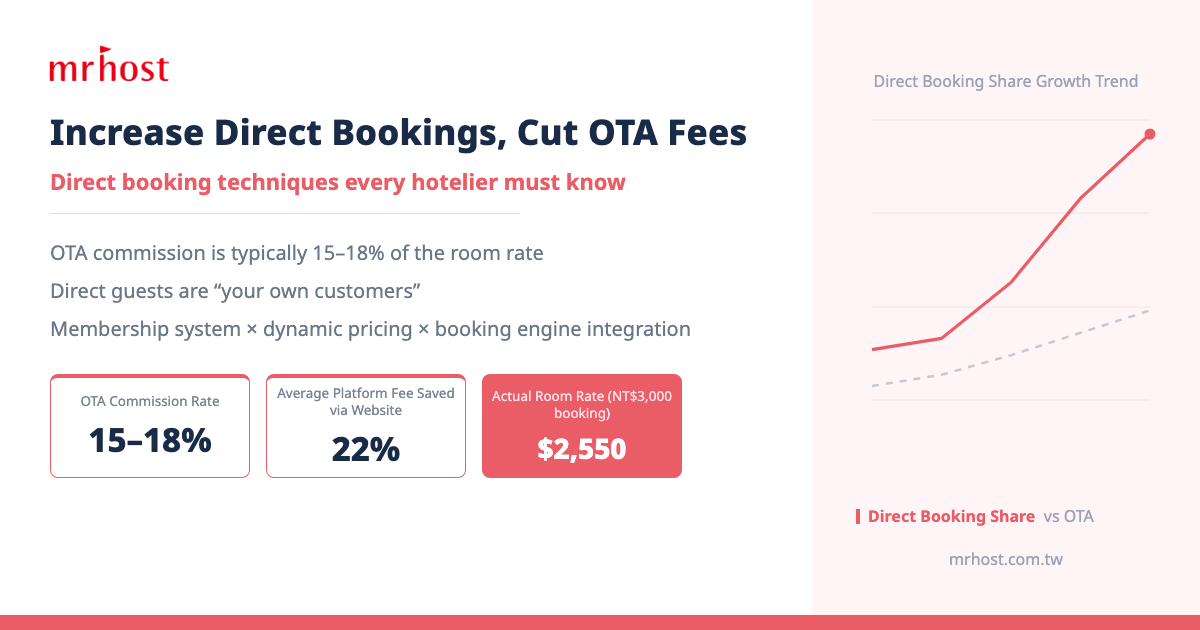
Give your website the ability to take international bookings. When overseas travelers surge, a booking engine that supports multiple languages and internationally common payment methods lets you take international bookings directly, outside the OTAs — raising your direct-booking share and lowering platform commission costs. This also echoes the long-term direction of growing direct bookings: use the high traffic of one event to build the foundation of direct booking.
Cultivate the right international channels. Travelers from different source countries favor different OTAs. For your event’s main source markets, prepare the corresponding international platforms and localized content so your exposure can actually meet demand — for example, Hostelworld specializes in the hostel space and is popular with overseas travelers, while Airbnb has more family guests and travelers looking for non-standard accommodation.
Read the event’s demand rhythm to time your moves. Schedule, ticketing, and official accommodation arrangements all shape when international travelers book. Reading these rhythms helps you judge when to start strengthening exposure and laying out your room availability.
In other words, the rate during an international event is short-term revenue, while the international demand and direct-booking foundation you build along the way is long-term revenue — and the latter is what’s really worth planning ahead for.
3. Policy shifts: capture a structural shift in demand, not a single peak
A policy shift is different from an event: it usually doesn’t bring one clear demand peak, but structurally and lastingly changes the makeup of a region’s guest base. Common examples include opening visa-free entry or easing visas for a particular country, adding international air routes or cruise calls, opening a new airport terminal or large convention center, or a region being designated a tourism or industry priority.
The nature of this kind of event is “slow but lasting.” Unlike an event, it has no clear start and end date; instead, a certain type of guest keeps increasing after the policy takes effect. So a hotel’s response to a policy shift isn’t short-term repricing, but medium-to-long-term guest-mix and distribution planning:
- Reassess your core source markets: which countries and types of guests will the policy bring in? What are their length of stay, spending habits, and booking channels?
- Adjust channels and content: for the new guests, prepare the corresponding localized content, international OTA channels, and payment and service details.
- Review room types and packages: do the new guests’ needs (e.g. long stays, business, groups) call for a different package mix?
The key to a policy shift is to manage it as a shift in the structure of your guest base, not as the rate on any single day. Whoever gets their guest mix and distribution in order before the policy takes effect can ride the wave when demand actually arrives.
4. Predictable, but with a longer lead time
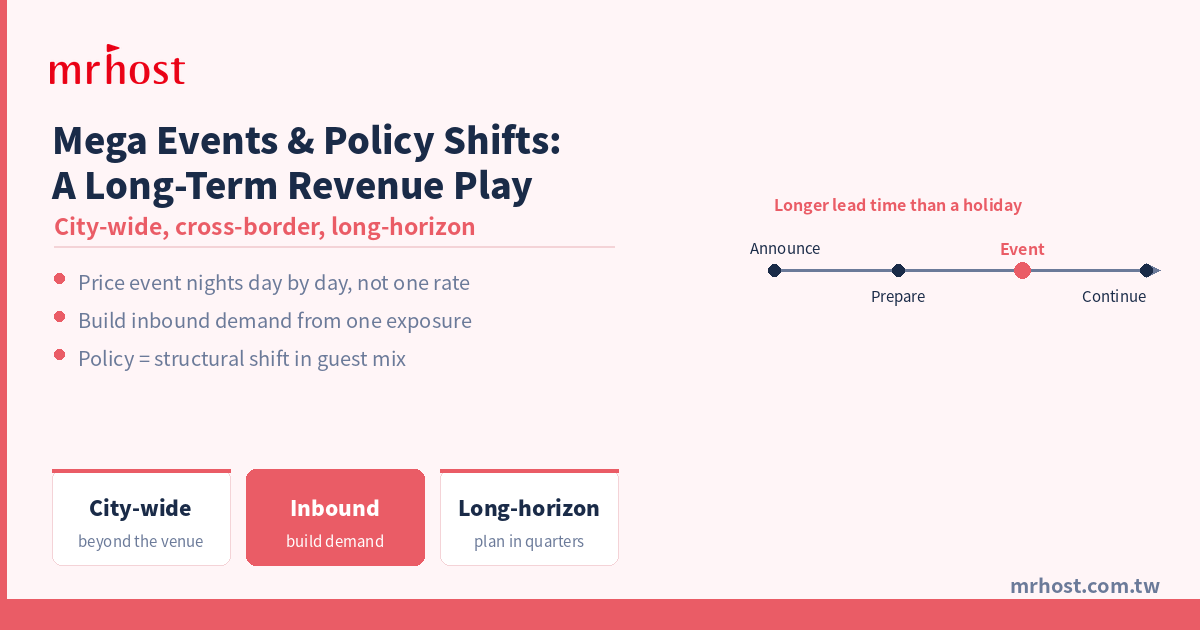
International events and policy shifts share one advantage with holidays — they are mostly announced in advance and predictable. But unlike a holiday, the lead time to prepare is much longer. A holiday is planned months ahead; international events and policy shifts often need preparation in quarters, even years. Roughly, you can think of it in stages:
- Announcement / bidding stage: when the host is confirmed or the policy direction is set, assess the possible impact on your own guest-base structure.
- Preparation / policy roll-out stage: start the real work — strengthen the website’s international booking ability, prepare the corresponding languages and channels, adjust the package mix.
- The event itself: adjust rates to day-by-day demand during the event and steadily take international bookings.
- Post-event / policy continuation stage: turn the international guests and word of mouth built during the event into repeat guests and long-term bookings.
The point of this timeline is that value isn’t concentrated only in the event itself; the preparation stage before and the continuation stage after are often where the opportunity is really made larger. The earlier you start, the more completely you can prepare.
5. Tools for the short term, consultants for the long term
The opportunity in international events and policy shifts spans the short term and the long term — matching the two capabilities of revenue management:
Event-night rates need to be adjusted in real time, day by day, across room types, by supply and demand. With a multi-day program and international and domestic demand interleaved, the number of rates to adjust is huge and hard to keep timely by hand. A dynamic pricing system can adjust automatically on real-time data, updating many times a day, laying out the rate for every day and every room type across the event so inventory keeps flowing healthily.
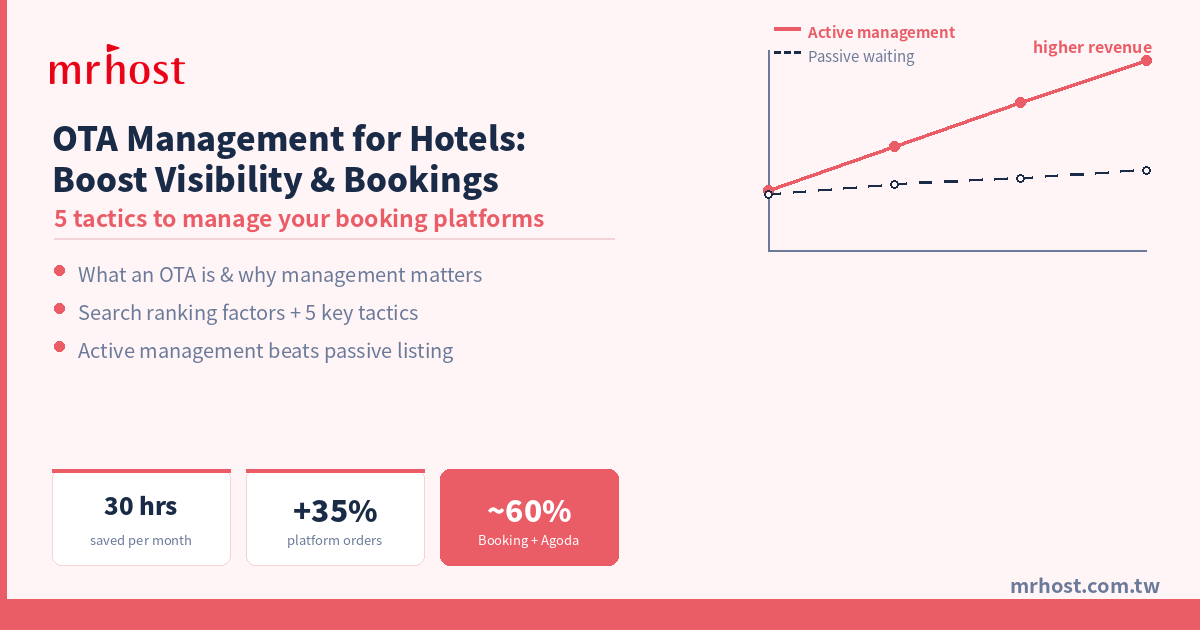
The medium-to-long-term guest-mix and distribution shift — judging new source markets, planning international channels, adjusting packages and the website’s international booking ability — needs a revenue management consultant’s reading and planning more. A consultant helps a hotel see clearly the change in guest base a policy or event brings, and turn a one-off burst of exposure into a long-term upgrade of the guest-base structure. mrhost Revenue Management pairs AI tools with dedicated consultants to help hotels capture both the short-term rates and the long-term guest opportunity of international events and policy shifts.
Who this is for
- Hotels in cities hosting or co-hosting international events or large international conferences
- Hotels near airports, convention centers, and international transport hubs, well placed to take inbound demand
- Hotels that want to raise their share of overseas guests and international direct bookings
- Hotels in regions with policy tailwinds such as visa waivers, new routes, or major infrastructure
- Homestays apply equally: you can target a specific international guest segment and use a differentiated experience to take the inbound demand events and policy bring
FAQ
Q: How is the revenue opportunity in major international events and policy shifts different from an ordinary big event?
A: An ordinary big event (such as a concert) is short-term, concentrated around the venue, and mainly domestic; international events and policy shifts are city-wide, cross-border, and long-horizon. The former is about event-night inventory adjustment and getting the size of a price increase right; the latter is about building international demand and reshaping your guest mix and distribution, with value spanning short-term rates and long-term revenue.
Q: How should I price during an international event?
A: The principle is the same as for any big event — let rates reflect real supply and demand based on your own demand strength and the competitive set’s live rates, adjusting day by day across a multi-day program rather than one rate for the whole event. At the same time, hold a transparent, reasonable line and avoid gouging that damages both the city’s image and your own.
Q: How do I capture a policy tailwind such as a visa waiver or new route?
A: A policy shift brings a structural change in your guest base, not a single peak. The way to capture it is medium-to-long-term planning: reassess your core source markets, prepare the corresponding localized content and international channels, and adjust your package mix — getting your guest mix and distribution in place before demand actually arrives.
Q: My hotel isn’t next to the main venue — can I still benefit from an international event?
A: You can. An international event is city-wide demand that mobilizes a whole city’s accommodation capacity, and hotels within commuting distance can take the spillover. The key is to lay out your room availability and international booking ability early, rather than just looking at the distance to the venue.
Q: How far in advance should I prepare for this kind of opportunity?
A: Earlier than a holiday. Although international events and policy shifts are mostly predictable, the lead time is often in quarters, even years. Assess the impact as soon as the host is confirmed or the policy direction is set, and strengthen your website’s international booking ability and channels early, so you can ride the wave when demand arrives.
This article was written by the mrhost revenue management team. mrhost provides hospitality revenue management consulting, helping hotels and homestays across Taiwan and the Asia-Pacific region grow revenue and stay competitive.